
Reviewed by Dr Emelie Fogelberg, BSc, DVM
Worms are common parasites in dogs, but “worms” are not one single problem. Different worms have different life cycles, routes of exposure and health impacts, and a dog can sometimes have a worm infection without looking unwell. The right parasite-control plan depends on your dog's age, weight, lifestyle, location, travel and the parasites they are most likely to encounter.1,2

1. Your dog can have worms without looking sick
One of the most important things to know about worms in dogs is that you cannot reliably judge infection by looking at your dog. Some intestinal worm infections cause obvious signs such as diarrhoea, vomiting, abdominal discomfort, weight loss, poor coat condition or pale gums, but infected dogs may also show few or no obvious signs.1,3
This is particularly relevant for tapeworms. Dogs carrying hydatid tapeworms, for example, can appear healthy while shedding dangerous tapeworm eggs in their faeces.4
So don't wait until you see a worm in your dog's poo before thinking about parasite protection. Regular preventive treatment, good hygiene and appropriate management of exposure all have a role.
If your dog is unwell, losing weight, has persistent vomiting or diarrhoea, has pale gums, or you see worms or worm segments in their faeces, speak with your veterinarian for advice.1
2. Not all worms are the same and neither is the protection they need
Dogs can be affected by several types of intestinal worms, including roundworms, hookworms, whipworm and tapeworms. Heartworm is transmitted by mosquitoes, lives in a dog's heart and can cause serious disease, so parasite protection may need to address more than intestinal worms alone.1,2
Different parasites have different routes of transmission and require different active ingredients for treatment or prevention. A product that controls one parasite is not automatically effective against another.
For a closer look at the main intestinal worms found in dogs, see our guide to intestinal worms.
The practical takeaway: when comparing parasite-control products, look at the actual parasites covered, not just whether the pack says “wormer”.
3. Your dog's lifestyle can change their parasite risk
Dogs don't have to live on a farm to encounter parasites. Hunting, scavenging, eating raw meat or offal, exploring bushland, camping, travelling, spending time off lead and coming into contact with wildlife or livestock can all change a dog's exposure.1,4
For example, dogs can encounter tapeworms through infected fleas, scavenging or eating infected animal material. Australian public-health guidance also recognises that urban dogs travelling to rural areas can play a role in the hydatid disease lifecycle.4,5
That means parasite protection should reflect the dog you actually have and not an assumption based only on where you live.
If your dog is a scavenger, bush explorer, hunter, frequent traveller or has access to wildlife or livestock, talk to your veterinarian or pet health professional about whether their current protection covers the parasites they could encounter.
Learn about the different ways your dog could pick up worms (without you even noticing).
4. Puppies need a different worming approach
Puppies can acquire some worms very early in life. Roundworms and hookworms can be transmitted from the mother, while puppies can also become exposed to parasite eggs or larvae in their environment.6
Independent expert guidelines from the Tropical Council for Companion Animal Parasites (TroCCAP) recommend treating puppies with an appropriate registered ‘wormer’ from 2 weeks of age and then every 2 weeks until 8 weeks of age.6
The important point is that puppy worming is not simply a smaller version of an adult dog's routine. Age, weight, parasite coverage and lifestyle all matter.
5. Worm prevention isn't just about treating worms
Effective parasite prevention combines the right treatment with sensible management of exposure. Regular parasite control is part of routine dog healthcare, alongside measures such as prompt faeces removal and good hygiene.1,2
- Pick up dog faeces promptly and dispose of it appropriately.
- Wash your hands after handling your dog, dog faeces, soil or potentially contaminated areas.
- Prevent scavenging and access to dead animals or animal carcasses.
- Avoid feeding raw offal.
- Keep flea and tick protection up to date.
- Review your dog's parasite protection if their lifestyle, travel or exposure changes.
6. Some worms can affect people too
Some diseases and infections can naturally pass between animals and people. These are called zoonotic diseases, or zoonoses.
Certain parasites found in dogs can also infect people. Hookworms, roundworms and some species of dog tapeworms can all cause disease in humans. Hydatid disease, caused by the dog tapeworm Echinococcus granulosus, can be deadly.5 Take our quiz to see if your family is at risk of tapeworms and hydatid disease.
People can be exposed in different ways. Dog hookworm larvae can enter skin from contaminated soil or sand, while roundworm and hydatid infections can occur when parasite eggs are accidentally swallowed.5
The risk is not a reason to avoid normal contact with your dog. Sensible hygiene, prompt faeces removal, preventing scavenging and monthly deworming are important ways to reduce risk.4,5
7. The best worming plan is the one that matches your dog
There is no single worming schedule or product that is right for every dog. A sensible parasite-control plan considers your dog's age, health, location, travel, lifestyle and likely exposure.1,2
When choosing protection, look beyond the word “wormer” and consider the breadth of parasite coverage. If your dog could encounter several different parasites, a broad-spectrum option may simplify protection by covering multiple parasites in one routine treatment.
For example, Advocate™ Ultra Chew is a monthly all-in-one chew available for dogs from 8 weeks of age and 2 kg that provides protection against ticks, fleas, demodex mites, heartworm, roundworms, hookworms and tapeworms.
That type of broad coverage can be particularly relevant for dogs whose lifestyle puts them in contact with multiple parasite risks. However, no product covers every possible parasite or every disease risk, so the choice should still reflect the individual dog and the current Australian product label.
The goal isn't simply to “worm your dog”. It's to choose parasite protection that makes sense for the parasites your dog is most likely to encounter and to keep it up to date.
The bottom line
Worms in dogs are not always obvious, and parasite risk is not limited to dogs living on farms. Dogs can be exposed in many different ways. Puppies need a specific early-life approach, different worms require different treatments, and lifestyle can change the parasites a dog is exposed to.1,4,6
For smart pet parents, the best approach is to understand your dog's risk, choose protection with appropriate parasite coverage, follow the product directions and review the plan when your dog's lifestyle changes.
If you're unsure which parasite-control approach is right for your dog, speak with your veterinarian or pet health professional.
PRODUCTS
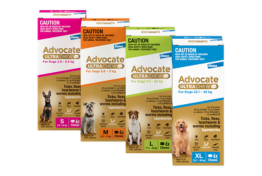
Advocate™ Ultra Chew for dogs
Advocate Ultra Chew offers the broadest spectrum parasite protection*^ against ticks, fleas, demodex mites, heartworm disease and intestinal worms including tapeworms.
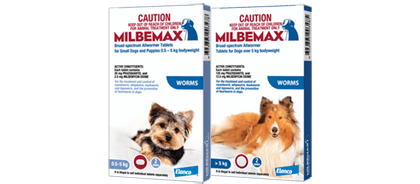
Milbemax™ for Dogs
Milbemax™ worming tablets for dogs protect against all the most common worms your dog will come into contact with, including tapeworm.
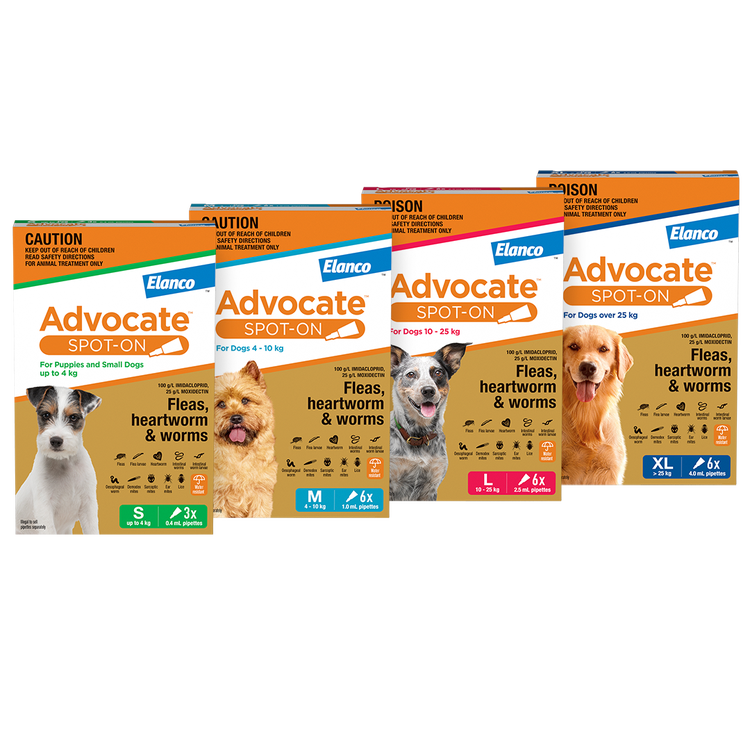
Advocate™ Spot-On for dogs
Advocate Spot-On provides fast relief from fleas, prevents deadly heartworm and helps protect your dog and your family from most intestinal worms
ARTICLES






References
- Agriculture Victoria - Routine healthcare for dogs
- Agriculture Victoria - Dog health requirements
- Agriculture Victoria - Routine healthcare for dogs: intestinal worm signs and parasite prevention
- Victorian Department of Health - Hydatid disease (echinococcosis)
- Healthdirect - Worms in humans
- TroCCAP - Canine Guidelines: Roundworms
