
Reviewed by Dr Emelie Fogelberg, BSc, DVM
Last updated: August 2026

Puppies can be infected with intestinal worms from a very young age. Roundworms and hookworms can be acquired from their mother, including through milk, and roundworm infection can occur before birth. Puppies can also be exposed to parasite eggs or larvae in the environment.
What worms can puppies get?
Puppies can be infected with roundworms, hookworms, whipworm and tapeworms. Roundworms and hookworms are particularly important in young puppies because infection can occur early in life and, in some cases, cause significant illness.
For more information about specific parasites, see our guides to:
How do puppies get worms?
Puppies can acquire worms in several ways. Roundworms can be transmitted before birth and through the mother's milk. Hookworms can also be transmitted through the mother's milk and through environmental exposure.
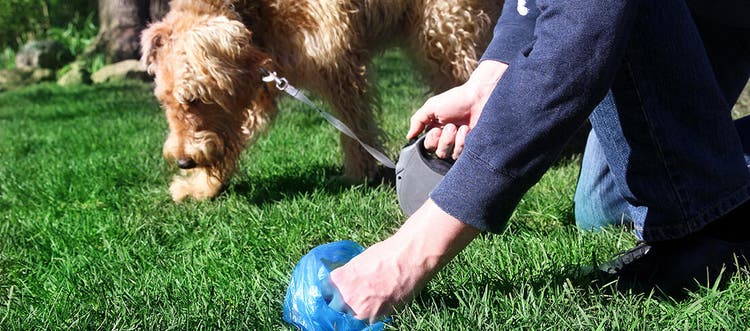
As puppies become more mobile and curious, they can also encounter parasite eggs or larvae in contaminated environments. Promptly removing faeces, avoiding raw meat and preventing hunting can help reduce parasite exposure.
What are the signs of worms in puppies?
- Weakness or lethargy
- Poor growth or failure to thrive
- Diarrhoea
- Vomiting
- Weight loss
- A swollen or pot-bellied abdomen
- Worms, mucus or blood in the stool
Not every infected puppy will show obvious signs. Roundworm infection can cause poor growth, a pot-bellied appearance, diarrhoea and vomiting, while severe hookworm infection in puppies can cause diarrhoea, anaemia and, in serious cases, death.1
How often should I worm my puppy?
Independent expert guidelines from the Tropical Council for Companion Animal Parasites (TroCCAP) recommend that puppies are dewormed every two weeks until 8 weeks of age, then monthly thereafter.1 The product used should be appropriate for the puppy’s age, weight and the parasites being targeted, and the current Australian product label should always be followed.
Puppy worming schedule
Puppy age | Treatment |
2 weeks | |
4 weeks | Milbemax |
6 weeks | Milbemax |
8 weeks | |
From 8 weeks | Continue the chosen Advocate product monthly |
Milbemax can be used in puppies from 2 weeks of age and 0.5 kg and treats and controls roundworms, hookworms, whipworm and tapeworms.
What can I use from 8 weeks?
From 8 weeks, monthly parasite protection can be continued with Advocate Ultra Chew or Advocate Spot-On, provided the puppy meets the relevant product requirements.
Advocate Ultra Chew: Advocate Ultra Chew is registered for puppies from 8 weeks of age and 2 kg and is given monthly. It treats and controls roundworms, hookworms and tapeworms, and also provides protection against fleas, ticks, demodex mites and heartworm.
Advocate Spot-On: Advocate Spot-On can be used in puppies from 7 weeks of age and is applied monthly. It protects against roundworms, hookworms and whipworm, as well as fleas and heartworm. It does not provide direct treatment for tapeworms, although flea control helps prevent flea tapeworm infestations.
Does my puppy’s lifestyle affect worming?
Routine puppy worming is important regardless of lifestyle. As puppies become more mobile, their exposure to parasites can change. Scavenging, hunting, eating raw meat or offal, and contact with wildlife or livestock can increase opportunities for tapeworm exposure. Travel, camping and bushwalking can also change a puppy’s exposure.
These exposures are particularly relevant when considering tapeworm protection. Learn more about tapeworms, including hydatid tapeworm and the exposures that can increase risk.
Can puppy worms affect people?
Some worms that infect dogs can also affect people (zoonotic). TroCCAP identifies several canine parasites, including Roundworms, Hookworms and Tapeworms as zoonotic. Good hygiene, prompt removal of dog faeces and appropriate parasite control can help reduce the risk of transmission. 1
How can I reduce my puppy’s risk of worms?
- Keep your puppy’s parasite protection up to date.
- Pick up faeces promptly and dispose of them appropriately.
- Wash your hands after handling your puppy or cleaning up faeces.
- Prevent scavenging and access to animal carcasses.
- Avoid feeding raw meat or offal.
- Consider your puppy’s exposure to wildlife and livestock.
- Review parasite protection if your puppy travels or their lifestyle changes.
When should I speak to my vet?
- Your puppy has persistent vomiting or diarrhoea.
- You see worms, mucus or blood in the stool.
- Your puppy is weak, lethargic or has pale gums.
- Your puppy is not gaining weight or growing as expected.
- You are unsure which parasite-control product or schedule is appropriate.
- Your puppy hunts, scavenges, eats raw food or has access to wildlife or livestock.
Your veterinarian can help assess your puppy’s parasite risk and choose an appropriate product and treatment plan.
Puppy worming FAQs
PRODUCTS
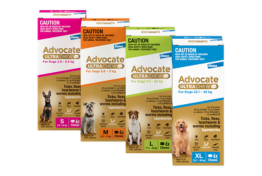
Advocate™ Ultra Chew for dogs
Advocate Ultra Chew offers the broadest spectrum parasite protection*^ against ticks, fleas, demodex mites, heartworm disease and intestinal worms including tapeworms.
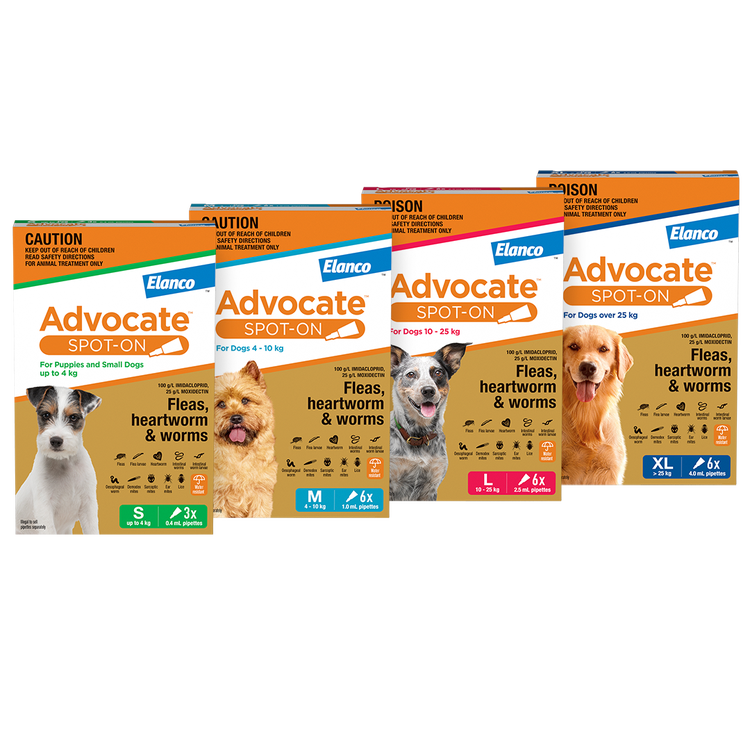
Advocate™ Spot-On for dogs
Advocate Spot-On provides fast relief from fleas, prevents deadly heartworm and helps protect your dog and your family from most intestinal worms
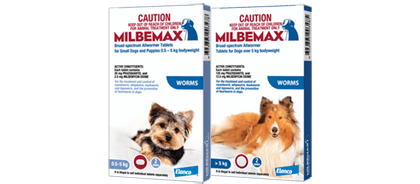
Milbemax™ for Dogs
Milbemax™ worming tablets for dogs protect against all the most common worms your dog will come into contact with, including tapeworm.




Read the product leaflet for full instructions. Advocate, Elanco and the diagonal bar logo are trade marks of Elanco or its affiliates. © 2026 Elanco or its affiliates. For further information contact Elanco Australasia Pty Ltd (ABN 64 076 745 198): productsupportau@elancoah.com.
