

Relieving your dog’s itch with Zenrelia™
Why has your vet prescribed Zenrelia for your dog?
Following your vet consultation, your vet has prescribed a medicine called Zenrelia to help relieve your dog’s itchy skin. Your vet may have explained that there are four common forms of allergic itch in dogs:1,2


Canine Atopic Dermatitis (CAD) - caused by environmental allergens, such as pollen or house dust mites. This is the most common type of skin allergy in dogs.

Parasite allergies - such as to flea bites

Food allergies - often to protein sources such as beef, dairy, chicken or pork in your dog’s diet, treats or medications. You dog may also have digestive as well as itch symptoms.

Contact allergies – triggered by direct contact with substances, for example plants, cleaning products or certain materials.

What is Zenrelia?
Your vet has prescribed Zenrelia for your furry friend because it is an innovative treatment, providing relief from itch and treating the underlying inflammation in your dog’s skin. The small, unflavoured, once-daily tablet can be given with or without food.

Now that your vet has prescribed Zenrelia, here are three ways it helps your dog:3

Reduces your dog's itch, fast.

Improves their skin condition.

Keeps them comfortable long-term.
How to open a Zenrelia blister pack
Giving your dog Zenrelia
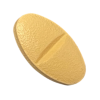
The tablets are hypoallergenic and free of flavour additives that could trigger food allergies.4
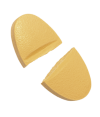
The tablets have a dividing line so can be split in half for doses involving half a tablet.
Zenrelia can be given with commonly used medications such as vaccines, antibiotics, parasite treatments and NSAIDs (non-steroidal anti-inflammatory drugs used to reduce pain and inflammation) but always follow the advice from your vet before doing so.4
If you have any questions about Zenrelia, please speak to your vet.
What can you do at home to help manage your dog’s allergies?2,5
There are several ways you can help your dog’s skin health, comfort and quality of life. For this to work well, speak to your vet about a long-term management plan.
 Give medications prescribed by your vet
For many dogs, medications prescribed by your vet are key to managing their allergy. Make sure you follow your vet’s instructions.
 Prevent parasites
Fleas, ticks and mites are common causes of itching, so follow the advice from your vet on the most appropriate parasite protection plan for your dog.
 Groom regularly
This helps remove environmental allergens, such as pollen, from your dog’s skin after they’ve been outside. Speak to your vet about the most suitable grooming regime for your dog.
 Provide a supportive diet
Some foods and supplements, such as essential fatty acids, can improve your dog’s skin health. Ask your vet for recommendations.
 Watch for signs
Contact your vet early if you notice an itch flare-up (scratching, licking or rubbing), and/or areas of sore or red skin.
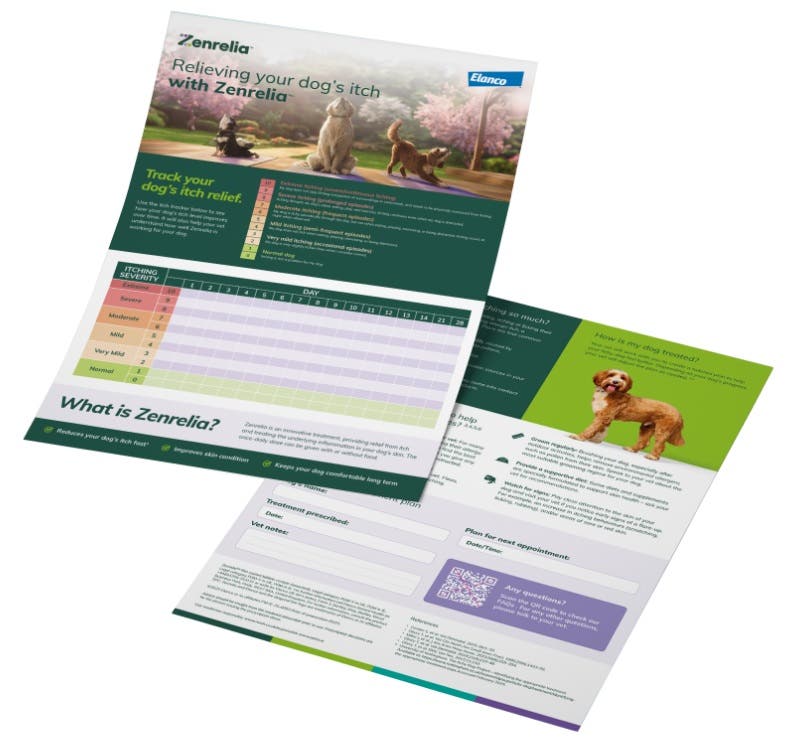
Track your dog's itch relief
Your vet will have given you some information about Zenrelia, along with an itch tracker. Use this itch tracker to see how your dog’s itch level improves over time. It will also help your vet understand how well Zenrelia is working for your dog.
Zenrelia™ Package Leaflet
Your dog has been prescribed Zenrelia tablets by the vet. View and download the Zenrelia package leaflet using the link below.
- Olivry T, et al. Vet Clin North Am Small Anim Pract. 1990;20(6):1443–56.
- Miller J, et al. J Am Anim Hosp Assoc. 2023;59(6):255–284.
- Forster S et al. Vet Dermatol 2025; Apr;36 (2):165-176.
- Zenrelia Summary of Product Characteristics.
- University of Nottingham. The Itchy Dog Project – Identifying the appropriate treatment. Accessed February 2025.
Brought to you by Elanco, makers of Zenrelia.