


Could your dog have arthritis?
Is your dog slowing down, showing signs of stiffness, and/or struggling to do things they used to enjoy? These may be signs that your dog has arthritis1.
What is arthritis?

Approximately 1 in 4 adult dogs have arthritis1,2.
Arthritis is a very common condition in dogs that causes stiff, painful, and swollen joints.1,3 As arthritis can worsen over time, it can significantly impact your dog’s quality of life.3 That’s why it’s important to see your vet to get the right treatment at the right time.

What causes arthritis in dogs?
Arthritis is common in dogs and can affect all ages and breeds.1,2,4 In fact, 40% of younger dogs show signs of arthritis on x-ray.4
It can have multiple causes, including:
- Underlying disease, such as developmental joint disorders, or joint injury: this is thought to be the most common cause4
- Genetics: some dogs are born with a higher risk of developing arthritis4,5
- Normal wear and tear as dogs age5
- Being overweight4
- Sometimes the cause is unknown4

Symptoms of arthritis in dogs
The early signs of dog joint pain can be subtle and easy to miss and include:
 Changes in general behaviour
Your dog may be slower or hesitant to do their usual activities, or even avoid them entirely, showing discomfort with obvious stiffness or limping.
 Slowing down when on walks
Your dog may go more slowly on walks, lag behind, want to walk short amounts with large rest periods or eventually even refuse to walk.
 Difficulty jumping or climbing
Your dog may find it difficult or be hesitant to climb into the car or go up stairs, and eventually may need to be lifted.
 Trouble sitting or lying down
Your dog may be slower or more awkward to sit or lie down, may drop to the floor and may hold their legs out to the side.
As arthritis progresses, symptoms worsen. If left untreated, symptoms can get worse over time - so be ready to take action as soon as you notice the signs.
When to take your dog to the vet if you suspect arthritis

If you notice any changes to your dog’s usual behaviour (e.g., limping, pain when moving, slowing down/stiffness)

If you see differences in activities they typically enjoy (e.g., walking, climbing, jumping)

If your dog shows difficulty sitting/lying down
Early diagnosis and treatment can help slow down the progression of osteoarthritis and improve your dog’s quality of life2 - so the earlier you contact your vet the better.
They will ask you questions or perform tests to understand more about your dog’s condition. These may include:
- Changes in behaviour: your vet will likely ask you about changes you may have noticed in your dog’s behaviour and mobility.6
- Physical examination: assessment of your dog’s joints, range of movement, and the ability to walk/sit/stand.6
- Further testing: e.g., an X-ray can help detect visible changes to joint(s), evaluate the extent of the condition, and monitor progression.
Sometimes your vet may notice signs of osteoarthritis during a routine appointment.
Want to know more?
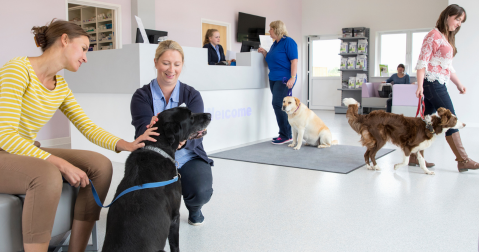
Diagnosing and treating arthritis in dogs
What you need to know about how arthritis in dogs is diagnosed and treated.

Activate 10% off* Petplan
Receive a 10% off introductory offer when you insure your pet online with our partner Petplan today.

Pet insurance: your essential guide
Everything you need to know about insurance for your pet.
- Bougherara H, et al. Open Vet J. 2025 Nov;15(11):5461-5465.
- Mosley C, et al. Front Vet Sci. 2022;9:830098.
- Cachon T, et al. Front Vet Sci. 2023;10:1137888.
- Anderson KL, et al. Front Vet Sci. 2020;7:220.
- Anderson KL, et al. Sci Rep. 2018;8(1):5641.
- Cachon T, et al. Vet J. 2018;235:1–8.